Notes: III
and so it continues, long after you are dust, the spirit of man lives on, in memories, traces, and synchronicities.

critique as an academic tool starts corrupting the soul when employed outside of a narrow healthy epistemic domain.
average person thinking civilizationally is not useful. water your plants, be kind to the weak. civilization is a second order outcome. it is not a “political” instrument.
sovereignty is an abused concept. in its most crude sense, that of “political” sovereignty, expressed by some vague notion of exerting unilateral power within fixed borders, is often harmful to the ordinary people. great crimes and suffering have been imposed based on some fractured understanding of maintaining sovereignty. power players would rather exert this sort of vulgar sovereignty even at the cost of decimating the lives of their constituents. this sort of sovereignty is only perhaps liberating or life-enhancing if coupled by a corresponding increase in the quality of life of the people.
cry everyday; there are always reasons to cry every day, and to not do so is a step towards death, وتولى عنهم وقال يأسفى على يوسف وابيضت عيناه من الحزن فهو كظيم.
do not get lost in being a “muslim.” pray, obey your Lord and love the Prophet, submit but do not reduce yourself to this thing that you are that has to defend its existence on the civilizational scale, you are much more precious than that.
surviving tragedies comes with the tethered effect of joy and pleasure migrating from lofty social ideals to the fundamental facts of life: steps, plants, air.
and so it continues, long after you are dust, the spirit of man lives on, in memories, traces, and synchronicities.
remember the dead. read obituaries from towns you do not belong to. would you not want to be remembered when you die? remembering the dead accords them a dignity that is so basic to the proper human experience.
the “doctor” is often the tyrant.
learn to feel like the cripple, the forsaken, the orphan, the widow, the poor, the dying, even if you are not.
the idea of legacy generally populates the mind at an older age when man is more cognizant that he is mortal. the notion of being remembered is not primarily about “leaving behind” something of value for those in one’s circle of socialization, but rather it is a presentist act that comforts the mind and the ego, it is a self-soothing attempt to solidify the feeling that one really exists.
there was moment, a period, during the technological revolution when utility of invention became inversely correlated to human well-being. the threshold of utility was crossed, and while it made sense to reach that point, the forces of production, obviously, could not be stopped at the equilibrium where mental well being was perfectly harmonized with the levels of mechanical change.
being dogmatic is unintelligent for many reasons, but the primary one is the mere fact that we do not know enough about the nature of the universe, of matter, to be so.
to feel persistent shock over tragedies requires excessive entitlement.
retrospective moralization after the fact of tragedy is a devastatingly human trait.
anger can never be a primary virtue, rage can never be productive. it’s self-defeating, pyrrhic. the tough things must be done out of love. anger as expression versus anger as motive are very separate.
when you break the pillars of common sense, there is no longer a referent to guide action, anything goes.
it is unclear whether weeping and silence, or laughter and outbursts, constitute the best medicine for the soul. perhaps both. there is no clear reason either should not have the same underlying mechanics.
one more day, it might still be.
ever since I have gained consciousness, I have been trying, my lord.
in the first moment sleep breaks, God leaves an impression on the mind of what’s to come.
every tragedy is all consuming, until the next bigger one.
what is miraculous or not is often defined by frequency in an inverse relation, not essentially by the quality of the event.
there is no wrestling with destiny once it has imposed itself. before it does, one can, at least in perception, wrestle with the outcome of time.
I remain too weak to force my will to coincide with yours, Lord. Forgive us for what we aim but fail to do. Is it not your will that is too lofty?
gratitude is modulated on a sliding scale. more precisely, increasing gradations of deprivation and suffering is the only way, for the ordinary, to develop and refine their sense of gratitude.
anything may destroy you, that is life.
the quranic ethos is an umbrella over all other scripture; it pulls closer their cracks, gives them merciful shade.
take a bath 3 times a day, drink bottled water ruthlessly extracted from hundreds of miles away.
a year is not long.
the only three states of freedom: death, disability, or annihilation in God.
help me! to trust you, God.
winter abound, make or break.
the devil has disappeared from discourse, partly explained by the hypertrophic growth of the self, which, with its associated bloating, affects perception, in turn allowing the spirit of the devil respite to dissipate into structures of society.
yet, if this is to be age of the individual, of the self, then so be it. it does not necessarily have to be the age of the meretricious self, it could be the age of the divine self, of the glorious flourishing of the human spirit, of one man, not a great man, just a man able to unite the part to the whole, totum simul.
wash yourself with tears from the sky, of divine nature crying to give life to the dying, to the rotting.
forgiveness derived from guilt is an inferior type, a negative virtue, than the one derived from the conscious or unconscious abdication of potential, a positive virtue.
karbala is islam’s christian suffering.
saviors are stupid, save yourself.
Faith: belief without experience, not belief without evidence. evidence may be repeated frequently on separate occasions, but it is not real unless subjective. However, experience, the subjective and visceral contact with the object of belief, is real, in a material way.
theorizing or opining about the ummah is indulgent at best and harmful at worst. it is not an idea to be thought and implemented. it is a second level outcome of acts, not a first level one.
cleaning a dirty street is piety.
I saw the Prophet sitting on a mat, with his back against the stone wall. I sat by his crossed legs, with my head bowed as in severe need of him. He looked at me with a mending smile and held my head to let me cry as I held his leg like a drowning man. and his companion then said: you had made a wish to join this highest of assemblies, but did you pay your dues? I asked: what dues as I held on to his leg as he stayed silent, onlooking. the companion replied: you made a wish for the loftiest of heavens, for the gift of our presence. I commend you for your ambitions, but then you, unready as you were, asked for a life of grief, your entry to this gathering.
“I have seen their ways, but I will heal them; I will guide them and restore comfort to Israel’s mourners, creating praise on their lips. “Peace, peace, to those far and near,” says the Lord. “And I will heal them.”
a basic islamic premise may be said to be the fact of religion being for all times and places. a priori, then, modernity has to be a friend of religion. anything less is just a failure of imagination or will.
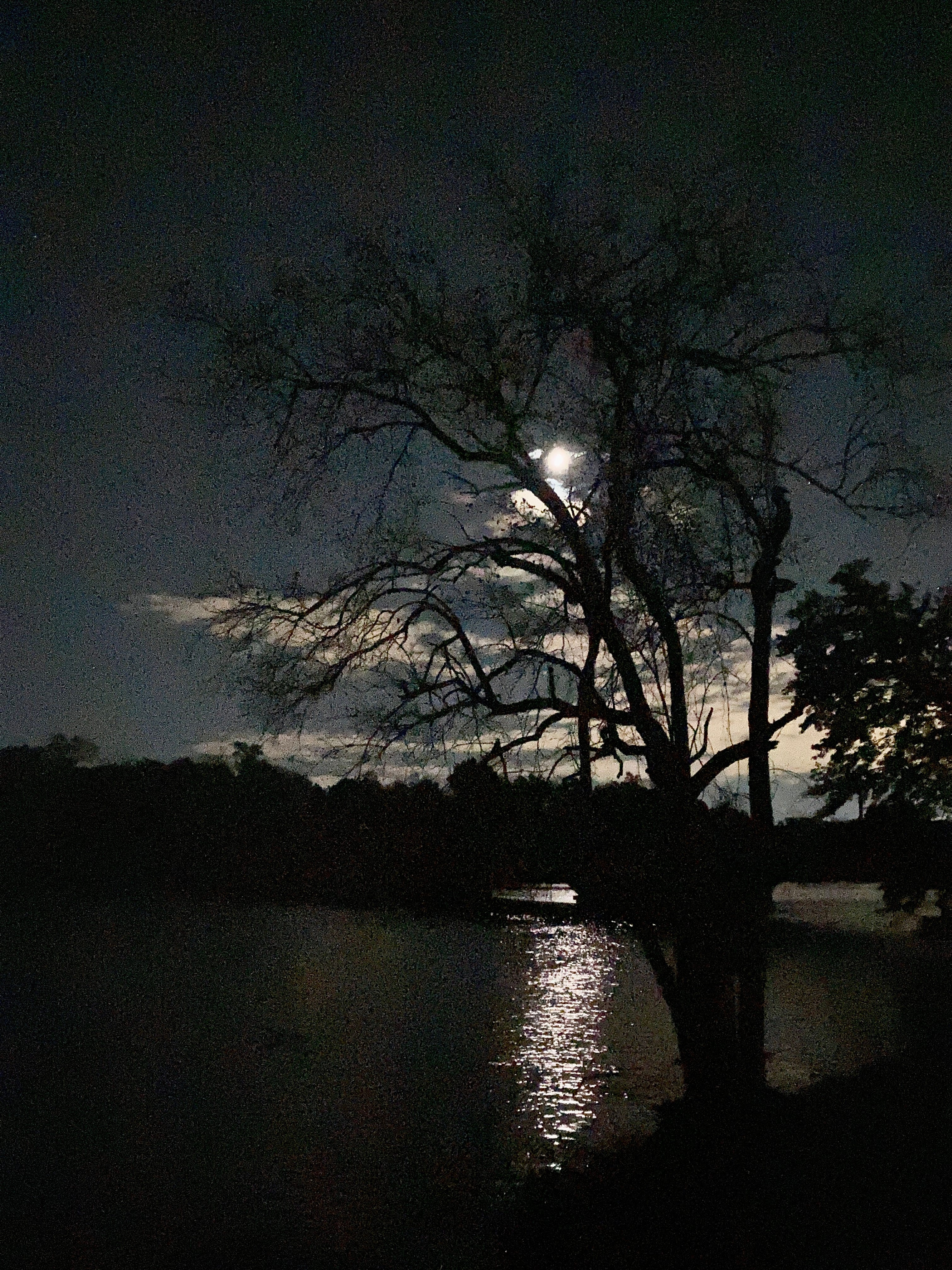
The value of a clear sky, with glimpses of a cloud, is lost on the free. Only the imprisoned can understand, in earnest, what a sky is. perhaps even on a more basic level, the sky may very well be a child’s realization of divinity. what else can captivate the soul, the senses, to that degree? specks of orange in the sky? the great painters of our and previous ages have always took to the sky to find refuge from the superficial dimensions of society. arguably nothing represents man’s innate disposition to find release from bodily experience than his desire for the sky, for the mysteries harbored within, for the potential of life yet witheld.
The template is there, so it can be achieved. It exists in a moment, so it can exist in many moments.
Is death momentous or merely just there? A grand rupture or?
why would you not wish to be united with your Lord? when you know even the most pleasurable moment of your life, in which you felt no pain or grief, was so ephemeral. is it not true that the entire map of human history is splattered with an aching desire to eradicate the perception of pain? from the debauchery of the wayward to the trance of the mystic, whatelse is the goal? man knows innately that there is the possibility of a creating permanence to unending relief from pain, but he also innately know that it cannot be brought into existence into this world, the famed kingdom of God. perhaps, it can to some limited extent, but never fully, even the highest of mystics would concede to the claim that we have to settle for good enough, that death is the precondition for what man pursues so fervently. what is to be done then? the realization that this world is both an anemic iteration for heaven and for hell is dizzying at first to the man who yields to it fully in spirit, when he moves beyond an intellectual acceptance to a total agreement to the fact. even in the most wondrous of meadows, with lush tapestries of green, you will always find the rotting dead wood and dying patches of grass, but then even in the gulag, you might witness the piercing beauty of a speck of the sun, lancing through the tiniest of cracks to plant a kiss of divine warmth on to your cheek. all of life is that, unstable, so why would you not wish to be united with your Lord?
glorious resolve.
“corruption” is very simply just incompetence, needs no great analytical efforts.
many critiques of secularism are remarkably stupid because they wish to rescue religion or tradition from the clutches of a modernity seeking to regulate them. the only useful ones are perhaps those that imagine religion or tradition as friends of modernity, of the awful nation state, and if it is innately violent, temper it, soothe it. it is simply a failure of imagination of being so beholden to the past, that one is almost afraid of imagining a future that accepts the present, the status quo, the raw hard empirical facts, now that is a romanticism of the highest order. idealism can be an excuisite good but not as a general principle of thought. no room for idiotic fatalism and its deceptively warm refuge of history.
structured chaos, within the bounds of certain organizing principles, rapid movement, the daze of spontaneity.
choice and free will are perhaps the most privileged concepts in human history.
fate accounts for the “random,” for the statistically unpredictable on the subjective level.
the heart must burn even for the worst of men, for how they desecrate their souls, for how they erect an impermeable wall between themselves and all that is kind and beautiful, divine.
I know not what is better for me, constriction or expansion.
take a bath, what a wondrous affair.
expanding the boundaries of life, of experience, directly constrains the enormity of tragedy.
even after being ravaged, being undone by loss, the human spirit has to persevere, until it can return to its maker.
near death experiences, the only real chance to burn the impurities of gold away. often missed in the relief of being delivered.
the blessing of suffering can only be called as such by those who have suffered.
death opens doors.